
Choosing Cabinet Door Hinges
There are a lot of factors in choosing the right cabinet door hinges. The type of cabinet and door being at the top of the list. Followed closely by the type, style, and function of the cabinet hinge. With as many options as there are available, there’s surely a hinge that will work for every possible cabinet door scenario you could imagine.
Types of Cabinets
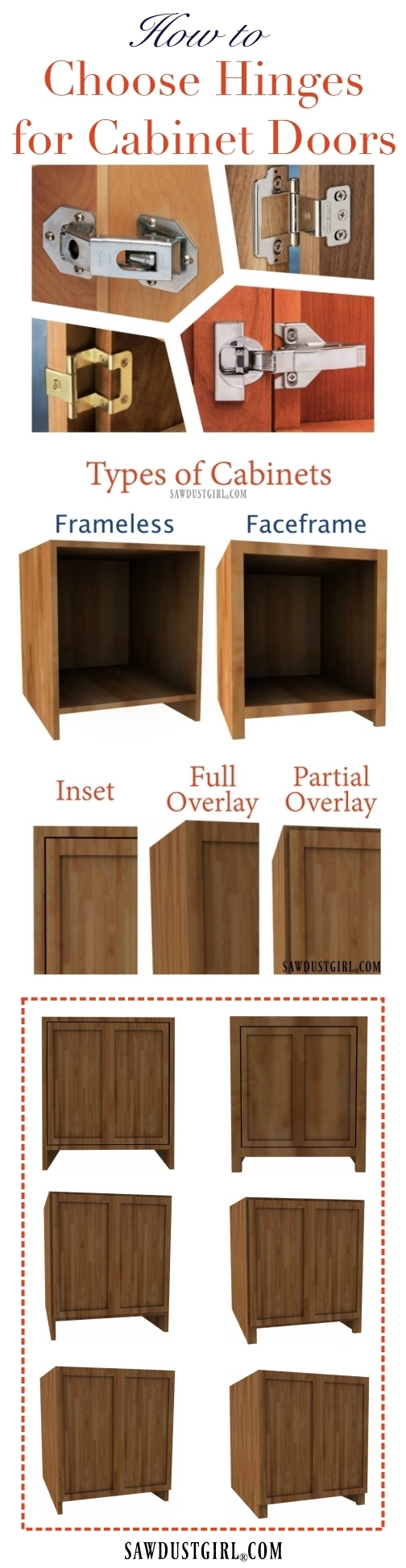
One thing to consider when selecting cabinet hardware is the type of cabinet you have.There are two types. Cabinets that are framed with a faceframe and those that are not. Cabinets without faceframes are, not surprisingly, called “frameless cabinets”.
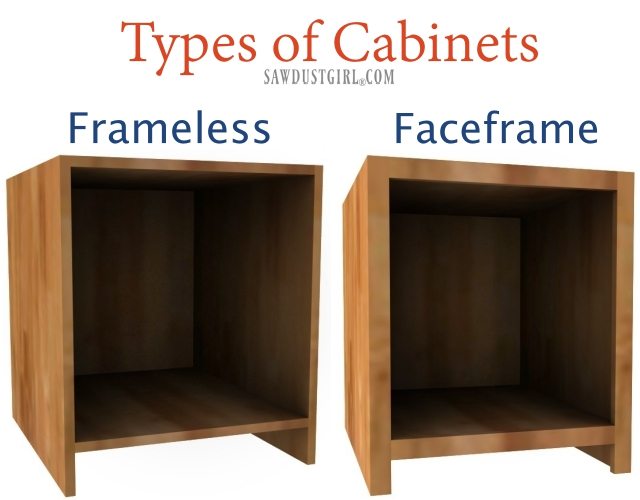
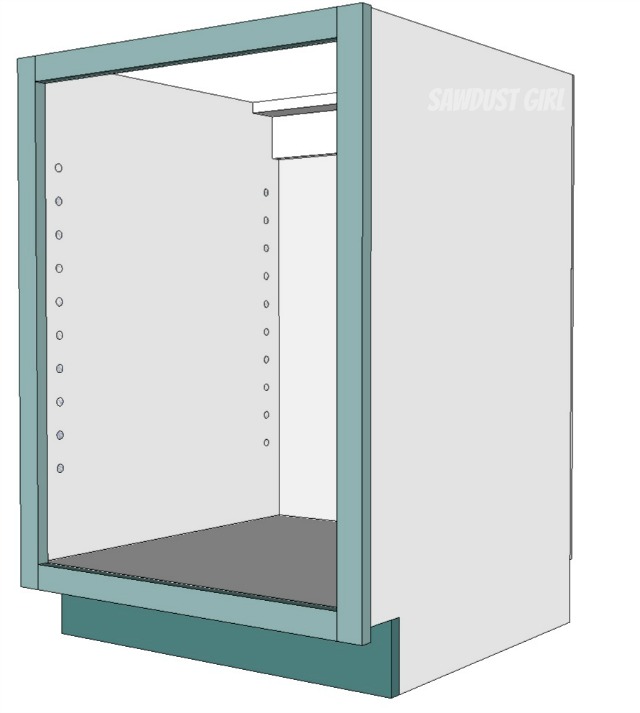
Face-frames are attached to the front of cabinets. Faceframes are generally 1×2 material so 3/4″ thick by 1 1/2″ wide. Cabinet sides are almost always 3/4″ or 1/2″ thick so the faceframe covers the front edge of the cabinet and overhangs the cabinet opening.
Frameless cabinets simply do not have a faceframe. The front edge of the cabinet box will have an edge treatment to cover the cabinet material. Frameless cabinets are also called European style cabinets.
Types of Door Installations
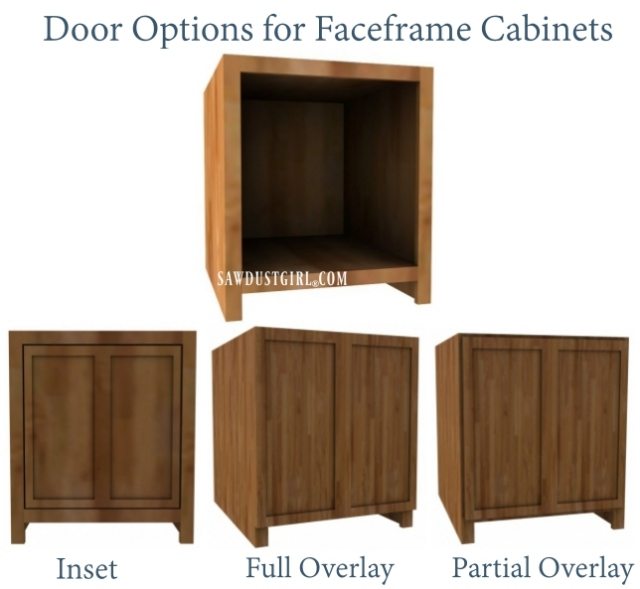
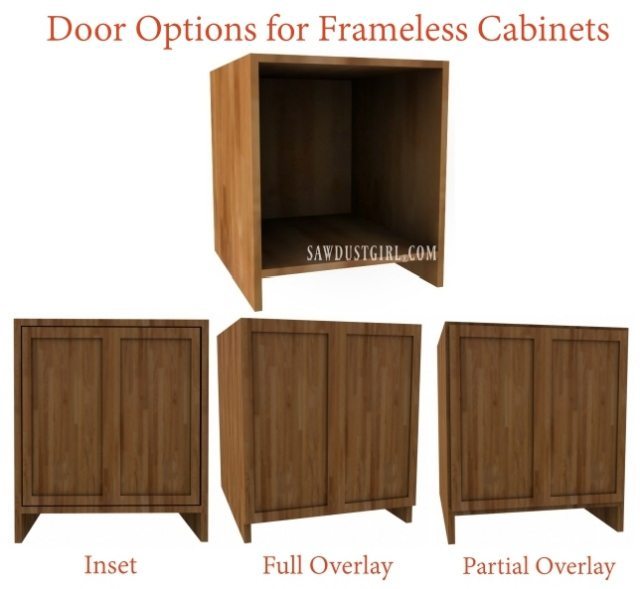
Both frameless and faceframe cabinets can have inset and overlay door installations. The position of the door when closed is the determining factor.
- If a door closes inside the cabinet opening, it is inset.
- Generally, when an inset door is closed, it sits flush with the front of the cabinet (or faceframe).
- If a cabinet door rests on the front of the cabinet (or faceframe) it is called an overlay door.
- Full overlay doors cover the full front edge of the cabinet.
- Partial overlay doors cover just a a portion of the cabinet front.
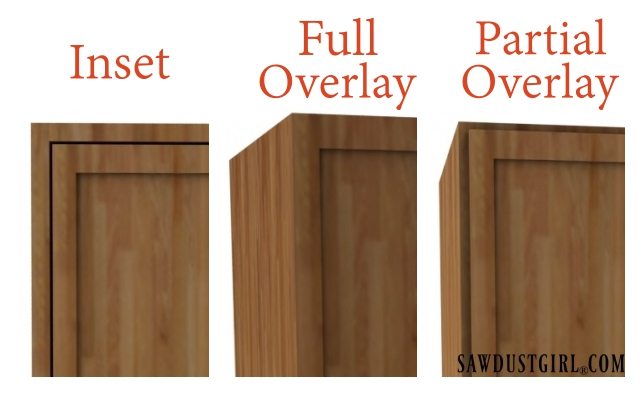
Overlay Doors
The overlay of a door is determined by how much of the cabinet front or faceframe the door covers when it is closed.
- Full overlay covers everything. So you don’t see any of the cabinet box or faceframe when the door is closed.
- Partial overlay doors leave a portion of the cabinet box or faceframe showing.
- The amount of cabinet showing on partial overlay doors is determined by the hinge you choose.
With the wide array of hinges available, you can make your door overlay anywhere from 1/4″ to over 1 1/2″ of your cabinet front material
Overlay doors are easiest to install because they don’t have to be perfectly sized and fitted. Additionally, they are more forgiving if your cabinet door opening is not perfectly square.
Inset Doors
Inset doors sit inside your cabinet opening, usually flush with the front edge.
There is a great deal of fiddle factor that goes into installing inset doors. Your cabinet door must be perfectly sized to fit inside your cabinet opening.
Inset doors are generally sized 1/8″ to 1/4″ smaller (in height and width) than the cabinet opening. This extra space is called a reveal. Getting that reveal perfectly uniform on all sides can be tedious. 1/8″ reveal on all sides is good. If you can get an even 1/16″ reveal you’ve mastered the inset door!
Choosing Hinges
When purchasing hinges, you have a lot of things to consider. In addition to the type of cabinet (faceframe or frameless), and the door overlay, you have lots of different styles of hinges to choose from!
- Concealed hinges – not visible from the outside of the cabinet when the door is closed. These are often called European hinges.
- Semi Concealed hinges – show a portion of the hinge while the rest is concealed inside the cabinet.
- Wrap around hinges – a portion of the hinge is bent to wrap around the door.
- Non-mortise hinges – are surface mounted.
Concealed hinges can be mounted on the surface of the door or a pressed into a “cup” that is drilled into the door. These are often called “cup hinges”. The cup diameter is generally 35mm but that can vary as can the drill depth required to accept the hinge. Most concealed hinges have built in adjustability so you can slightly change the position of the door without relocating the hinge.
Exposed hinges are most often used when replacing hardware on old kitchen cabinet doors. Most don’t have the adjustability that concealed hinges have.
When installing hinges on new doors, I always try to buy hinges that have the most built-in adjustability possible. Not much sucks more than drilling multiple holes in your cabinet sides in order to reposition your door slightly.
With that in mind, let’s break down hinges by cabinet style.
Faceframe Hinges
Deciding between concealed or exposed hinges is a matter of functionality as much as it is a style choice. Exposed hinges add a decorative element to cabinet doors though you loose the adjustability allowed by modern concealed hinges.
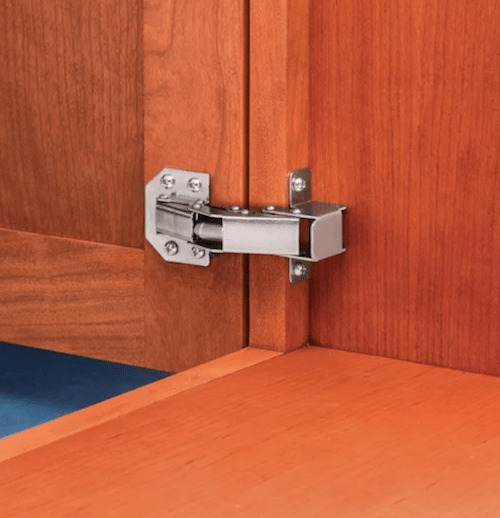
This hinge is a self-closing concealed hinge for face-frame cabinets that mounts on the surface. No drilling required. These are designed for use on materials from 5/8″ to 3/4″ thick and allow overlays of 1/2″ to 5/8″ (depending on door thickness).
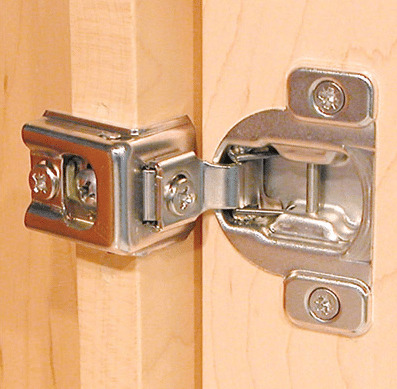
These hinges are compact and have a soft-close feature. They have 3 way adjustability and come in overlays that range rom 3/8 to 1 3/8″. 35mm cup diameter with 110 degree opening.
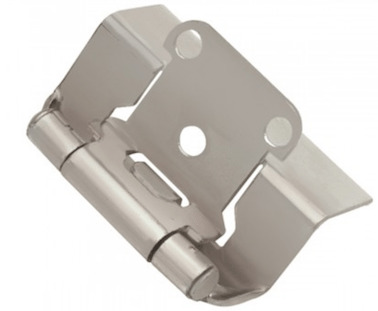
A lot of older cabinets have surface mounted overlay hinges. These have no built in adjustability.
Another 3 way adjustability hinge for face frame applications. This is for inset doors. These are not soft close hinges.
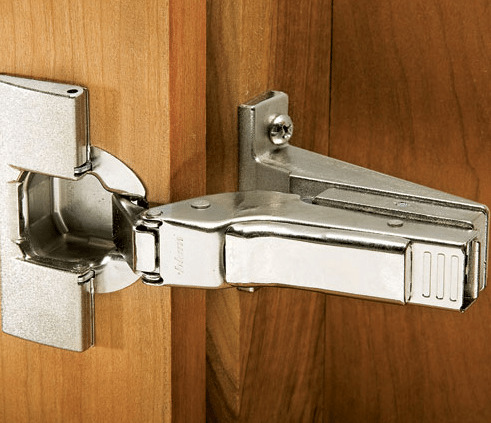
Face-frame cabinet hinge that requires no mortising to install. Screw right on to the door and cabinet. Meant for doors that are 3/4″ thick. (Which most doors are.)
Frameless Cabinet Door Hinges
Sometimes hinges can be used for either faceframe or frameless cabinets. Make sure you read all the specifications on the hinges to ensure you’re getting what will work for you.
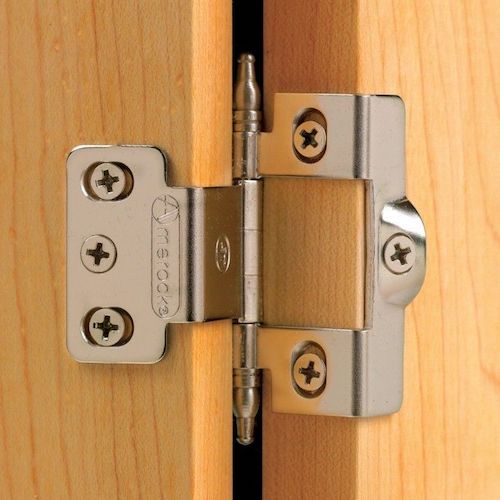
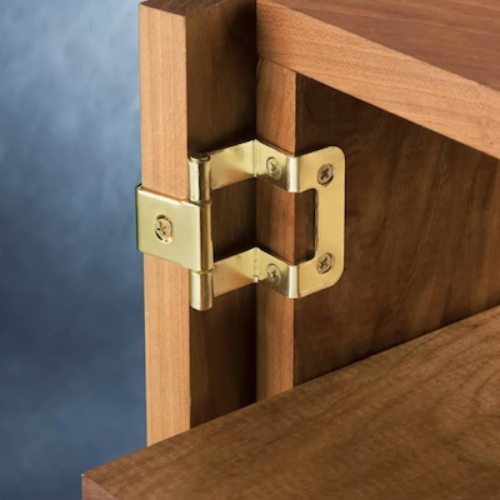
- These overlay hinges swing the door completely around to the exterior side of the cabinet wall. They’re great for cabinets with slide out shelves.
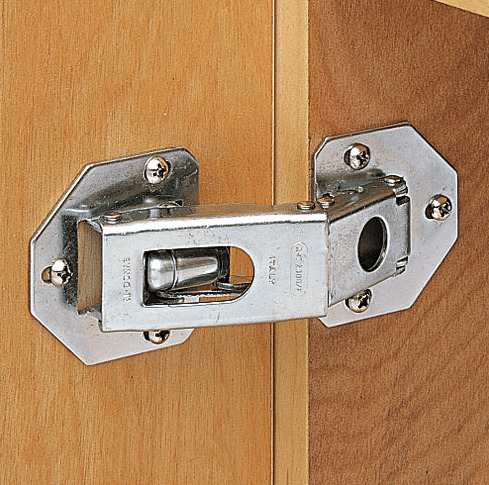
- This invisible spring hinge is surface mounted and can be used for inset, or overlay doors on frameless cabinets.
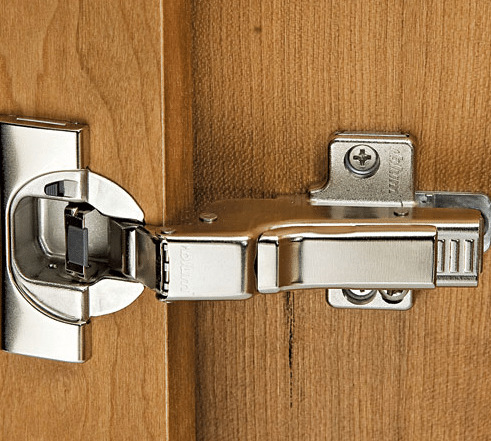
This is the kind of hinge I probably use the for frameless cabinets. (When I build a cabinet with a faceframes but there is no lip on my faceframe — this is also what I use.)
Cup Hinge Drilling Jigs
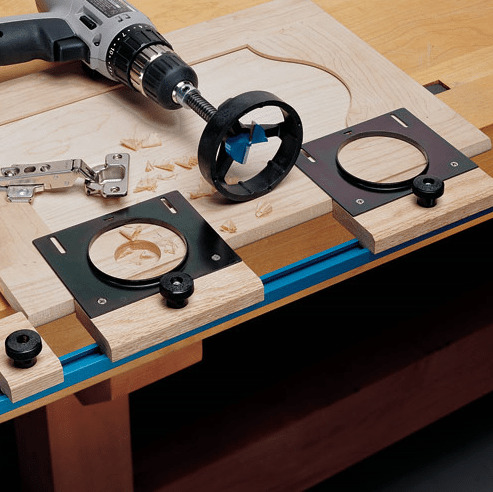
When using cup hinges, make sure you have the right size bit for the cup hinge you bought. The Jig It from Rockler is one of less expensive cup hinge drilling jigs. It helps keeps the drill straight while you drill cup holes. And the stop collar ensures you drill to the correct depth. This jig is about $140.
There are a lot more hinge choices that what I’ve included in this post. It would be impossible to list every single option available. Since new innovations are being made all the time, the list would have to keep growing endlessly.
Hopefully now you have a good understanding of the different types of doors, and overlays. And with that knowledge you should be able to find exactly the type of hinge that you want to use in your next cabinet door project.
Get my Cabinet Building 101 eBook. All the information in one place that you can download and keep on hand!
$9.99Add to cart
I’d love for you to share this post!

Thank you for all the great information!
I am very new to all this so forgive my ignorance but I have a question about these hinges that I can’t seem to find information on, or I am just missing it somehow.
I have a bathroom medicine cabinet where the carcass and doors are made from half-inch material. At the moment it is frameless but I could easily add a face frame if needed.
The issue I am running in to is whether or not I can use concealed hinges for a full overlay, face frame or not, on 1/2 inch materials?
It seems like all hinges are made for 3/4 inch+ material, not 1/2 inch.
Do you happen to know if there are concealed hinges that will work with that thickness? I see the cup diameter listed on hinges, but not the depth of the cup. That seems like it should be a standard measurement (to this newbie) to include but surprisingly it’s not. I asked a couple different people at 2 different stores and was looked at like I was completely out of my mind. LOL
Maybe I am? Hehe
Generally doors are made out of 3/4″ material so I doubt you’ll find a cup hinge that will work. That isn’t to say that you won’t find a concealed, full overlay hinge that will work with your material. You’ll have to search and I find the internet is the best place to find every possible option out there.
Hello, I am asking for your help for this 60 year old woman with no cabinetry/hinge knowledge. I am about to have my 25 years old cabinets with visable hinges painted and would like to have concealed hinges but not sure what kind I need. I also would like to have the least amount of work required as my son in law has offered to work on this but he has not done anything like this before. After my research on your site and others, I know I have a partial overlay and the overlay is 1/4 which is not real common. Can you tell me what you would suggest?
Manufacturers continually make new products so you just have to search to see what’s available that will work for you.
Hello!
Thanks for this post! Unfortunately I’m still in need of some help and hoping you are willing to cast your expertise on my project. I’m planning to build a bank of some frameless MDF wardrobes for our attic master bedroom (3/4 inch MDF). I am hoping to achieve an overlay, but not the full european style overlay. I want something slightly less modern and hoping to have the doors be 1/2 overlay leaving a 1/4 of the cabinet exposed, so a full 1/2 when two are together. Do you still have to buy hinges with a specific overlay amount for frameless cabinets? All the specific overlay measurement hinges I’ve found appear to be for framed cabinets, but all the posts I see say you need to match the overlay amount. I don’t think I need the ‘partial overlay’ hinges for frameless cabinets because I’m building independent wardrobes and setting them side-by-side (a la your angled cabinets).
Thanks for any help you are willing to give!
I would like to install new kitchen cabinet doors that almost cover the face frame. I will need a 1 1/2 inch overlay hinges to do this. What sort of hinges should I use and do they need to have a cup drilled in the door?
You’ll have to search for 1 1/2″ overlay hinges and decide what kind of installation method you want. Based on what hinges you can find, you may or may not have too many options.
Sandra you are AMAZING. This site is great and so easy for this 74 year old grandmother to understand. I see that you have answered questions from 2013 and as recently as yesterday. Love it. We recently decided to paint our existing kitchen cabinet doors. We also decided to change to soft close hinges. Not knowing that the existing hinges state the overlay on the inside of the hinge, I went online and learned how to measure door overlay for face frame cabinets. I got 1/2 inch overlay and ordered 2. They seem to work just fine. Today the guys came to take my cabinet doors for painting and we learned the EXISTING hinges are 5/8 inch overlay. Quite honestly, I was all set to order 50 1/2 inch overlay soft close hinges. Now, I find that if I order 50 5/8 inch soft close hinges, it will cost me >$60.00 more. Here is the question> should it be a problem for me to use the 1/2 hinges instead of 5/8 hinges. Also, many people have said that if I am replacing hinges to soft close, I only need to replace 2 (the middle hinges) on 4 hinge doors. Thank you so much.
The only problem I can see with changing the overlay is if you have any cabinets with double doors. If there is a style in the middle, it shouldn’t matter. If there is no style, then you could be left with a gap.
If the only reason you are changing your hinges is to achieve “soft close”, you can just add a soft close attachment/device. It seems you would save some money doing that, rather than changing all your hinges. Depending on the type of hinges you currently have, you might be able to get one that attaches to existing hinges (Like this one https://bit.ly/3fZCD5s.) Or you can get one that attaches to the cabinet box itself. (Like this one https://bit.ly/3hCZkge)